
Federal Voter Eligibility and Mail-in Ballot Regulations
Where Things Stand
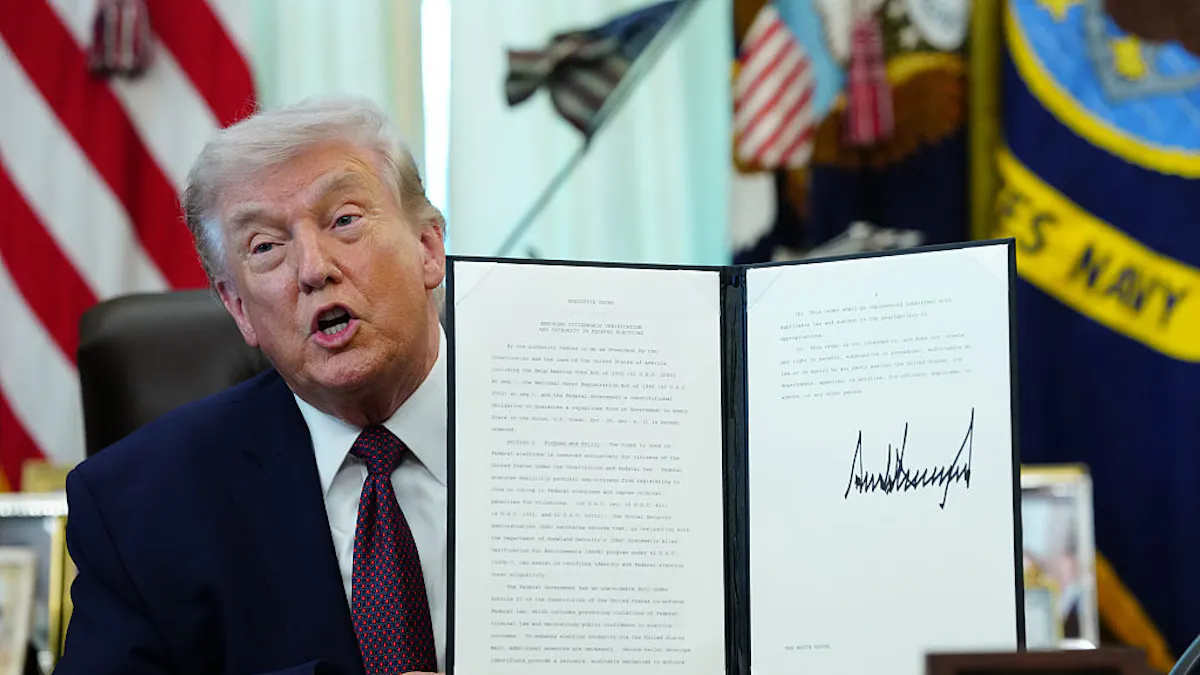
President Trump signed an executive order that requires federal agencies to share citizenship lists with states to check voter eligibility. The order also forces the Postal Service to use specific barcodes and logos to track all mail-in ballots. This policy is now in effect and requires agencies to give these lists to states at least 60 days before federal elections.
Key Statements
“President Trump signed an executive order directing federal agencies to use government data to help states verify voter eligibility and tighten mail-in voting regulations nationwide.”
Confirms the federal government is using its data to influence state voter rolls and mail-in rules.
“President Trump signs an executive order directing federal agencies to verify the citizenship and eligibility of voters receiving mail-in ballots for federal elections.”
This highlights the specific focus on citizenship verification for mail-in voters.
Who This Affects
Hurts
Naturalized citizens are the group most likely to face extra scrutiny under this order because their citizenship status is tracked through federal naturalization records. Database errors, name mismatches, or processing delays could result in naturalized citizens being left off the citizenship list, creating obstacles to receiving mail-in ballots or triggering unnecessary investigations. While a correction process exists, it places the burden on individual voters to check and fix records before each election.
The order significantly increases surveillance and enforcement targeting undocumented individuals in the election context. By cross-referencing federal immigration databases with voter rolls, it creates a mechanism for identifying and potentially prosecuting undocumented people who may have been registered to vote, even inadvertently. The order also raises risks for mixed-status families where citizen family members vote.
Visa holders could face increased risk of enforcement actions if they are mistakenly registered to vote or if their records appear on voter rolls. The cross-referencing of DHS immigration databases with election data could flag legal residents who are not citizens, potentially leading to investigations or complications with their immigration status.
Green card holders (lawful permanent residents) are non-citizens who cannot vote in federal elections. This order creates new systems that cross-reference immigration and election data, increasing the risk that green card holders who are inadvertently on voter rolls could face federal prosecution. Even accidental registration, such as through a motor voter process, could trigger serious legal consequences under the prioritized enforcement framework.
Mixed
Federal employees at DHS, SSA, USPS, and DOJ face major new responsibilities under this order. DHS must build infrastructure within 90 days to compile and maintain citizenship lists for all 50 states. SSA must share citizenship and identity data. USPS employees must implement an entirely new tracking and verification system for mail-in ballots. These are significant new workloads with tight deadlines and potential legal liability.
News
Trump Targets Mail-In As New Move Could Reshape How Your Ballot Is Handled
Trump signs order on mail ballots, escalating election overhaul push
Analysis generated by AI. Always verify with official sources.