
President Trump Welcomes Artemis II Astronauts to the Oval Office Following Lunar Mission
NASA Artemis Program·February 10 – April 30, 2026
1 month ago
President Trump Welcomes Artemis II Astronauts to the Oval Office Following Lunar Mission
President Trump hosted the Artemis II crew at the White House to celebrate their historic flight around the Moon. During the meeting in the Oval Office, the President praised the astronauts as heroes who captivated the world during their mission. This visit followed the crew's successful return to Earth after traveling over 250,000 miles into space to complete the first crewed lunar flyby in over 50 years.
The White House visit marks a key moment for the Artemis program as NASA prepares for future lunar landings following the splashdown of the Orion spacecraft. Officials indicated that the crew's journey would continue with a visit to the United Nations the following day. President Trump emphasized that this mission represents just the beginning of a new era in American space exploration from the Moon to the White House.
President Trump welcomes the astronauts of the Artemis II mission to the Oval OfficeAstronauts visiting the UN tomorrowArtemis II is just the beginningNASA's Artemis II crew returned to Earth after a nine-day lunar missionNASA's Artemis II mission concludes with a Pacific Ocean splashdownNASA's Artemis II mission reaches a record distance of 252,000 miles from Earth
2 months ago
Artemis II Astronauts Return to Earth Following Record-Breaking Flight Around the Moon
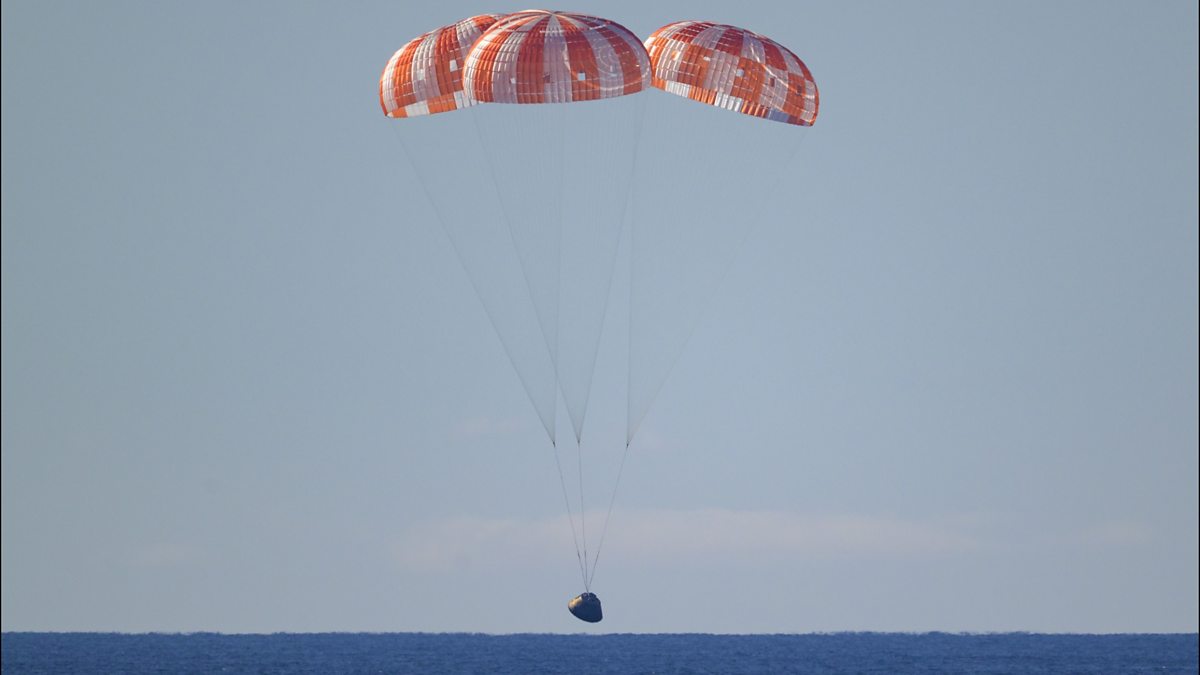
The Artemis II crew returned to Earth on April 11, 2026, splashing down in the Pacific Ocean after a 10-day journey. During the mission, the four astronauts traveled further from Earth than any humans in history to orbit the Moon. The spacecraft re-entered the atmosphere at speeds nearing 25,000 mph before its safe recovery. This mission marked the first crewed lunar flyby in over 50 years and involved a partnership between the United States and Canada. Observers noted that the mission served as a testament to human ingenuity and inspired a new generation of scientists and engineers across the globe.
Mark Kelly on Artemis II Mission SuccessBarack Obama on Human IngenuityGovernor Jared Polis on Aerospace InnovationBBC World Service: Artemis II Splashdown
2 months ago
NASA Completes Artemis II Mission and Increases Cadence for Future Lunar Landings
NASA's Artemis II mission concluded with a splashdown in the Pacific Ocean. This was the first crewed lunar flyby in over 50 years. The mission served as a critical flight test for the program. The crew studied the lunar surface and provided data on how deep space travel affects the human body. The agency also announced it will increase the frequency of Artemis missions to keep a long-term presence on the moon. NASA plans to use Artemis III to test systems in low Earth orbit. This prepares the agency for a lunar landing with Artemis IV in 2028. Supporters say more frequent flights will reduce risks by building a more capable workforce.
NASA Artemis Mission Cadence UpdateArtemis II Flight Test DetailsScience of Deep Space TravelBenefits of Frequent Missions
Key Statements
SSen. John Cornyn
“Today, the @NASAArtemis crew will get to witness the far side of the moon during their lunar flyby.”
This confirms the specific mission milestone occurring on the current date of April 6, 2026.
BBarack Obama
“It was inspiring to watch the Artemis II launch yesterday — @NASA’s first crewed mission around the moon since 1972.”
This provides the historical context for why the current mission is a significant return to deep space.
News
BBC World Service - Global News Podcast, Artemis II splashdown
Artemis II crew closes in on Earth as mission ends with Pacific splashdown and more top headlines
Artemis II Astronauts Go Farther From Earth Than Ever Before
Political Response
0 statements
Analysis generated by AI. Always verify with official sources.