
Congress Proposes New 8% Royalty and Cleanup Fees for Hardrock Mining on Federal Lands
A senate committee must act next: committee consideration.
No action since March 2025
Scores run from -100 (strongly harmful) to +100 (strongly beneficial) for each group, combining impact, certainty, scope, and duration ratings of 1-5. How impact scoring works
Small mining companies would face significant new costs they've never had before — royalties of 5-8% on gross income, annual claim maintenance fees of $200 per claim, land use fees, and an additional 1-3% abandoned mine reclamation fee. They'd also need to post financial assurances (bonds) large enough to cover full cleanup costs, get formal permits, and meet quarterly inspection requirements. These combined costs could make some smaller operations unprofitable.
Committee on Energy and Natural Resources. Hearings held. Hearings printed: S.Hrg. 119-46.
Read twice and referred to the Committee on Energy and Natural Resources.
Sent to a congressional committee for expert review. The committee decides whether this bill moves forward.
Introduced in Senate
The bill was officially filed and given a number. It now enters the legislative queue.
Senate Energy and Natural Resources Committee will mark up bills including measures to block mineral development on federal lands. Top Democrat Martin Heinrich and Sen. Ben Ray Luján are pushing legislation to reform mining rules and protect watersheds from new extraction projects.

The late Rep. Raúl Grijalva championed the overhaul of the 1872 Mining Law, arguing it allowed corporations to exploit public lands without paying royalties. His legacy continues with the 2025 Mining Waste, Fraud, and Abuse Prevention Act aimed at modernizing federal hardrock mining policy.
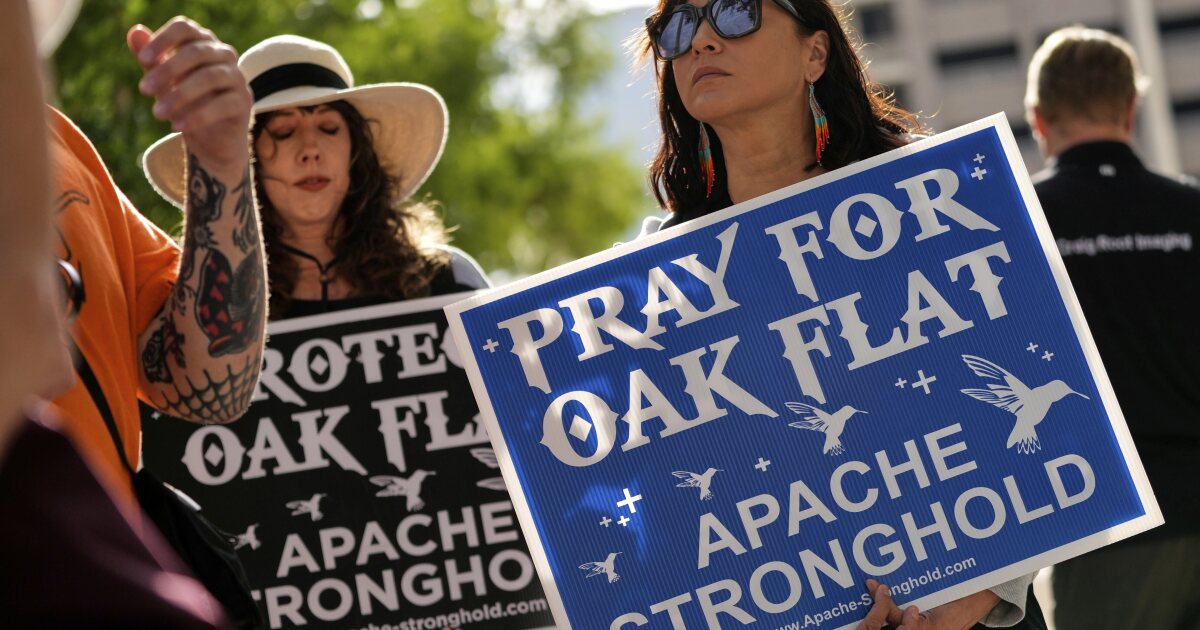
Rep. Adelita Grijalva introduced legislation to halt a massive copper mine in Arizona, continuing her father's work to reform federal mining laws. The bill seeks to protect sacred sites and water resources from multinational mining interests that currently pay no federal royalties.
No votes or related bills recorded for this bill yet.
Document Type
Congressional Bill
Official Title
Mining Waste, Fraud, and Abuse Prevention Act of 2025
Analysis generated by AI. Always verify with official sources.