
Congress Proposes $635 Million to Turn Deep Underground Heat Into Clean Electricity
The Hot Rock Act is currently in the early stages of the legislative process and is waiting for review by three different House committees. Nothing has happened with this bill since February 2026, which is a period of four months. It is not moving forward at this time.
Scores run from -100 (strongly harmful) to +100 (strongly beneficial) for each group, combining impact, certainty, scope, and duration ratings of 1-5. How impact scoring works
Independent contractors working in the oil and gas industry or as skilled technicians (welders, machinists, pipefitters, electricians) are explicitly included as eligible participants in the workforce cross-training program. This could open doors for them to pick up new skills and move into the geothermal energy field.
Referred to the Committee on Science, Space, and Technology, and in addition to the Committees on Natural Resources, and Education and Workforce, for a period to be subsequently determined by the Speaker, in each case for consideration of such provisions as fall within the jurisdiction of the committee concerned.
Sent to a congressional committee for expert review. The committee decides whether this bill moves forward.
Introduced in House
The bill was officially filed and given a number. It now enters the legislative queue.
The Hot Rock Act targets 'superhot' rock found miles underground. The bill funds research, field demonstrations, and workforce training programs—including retraining for oil-and-gas workers—to create conditions for sustained experimentation similar to the shale revolution.
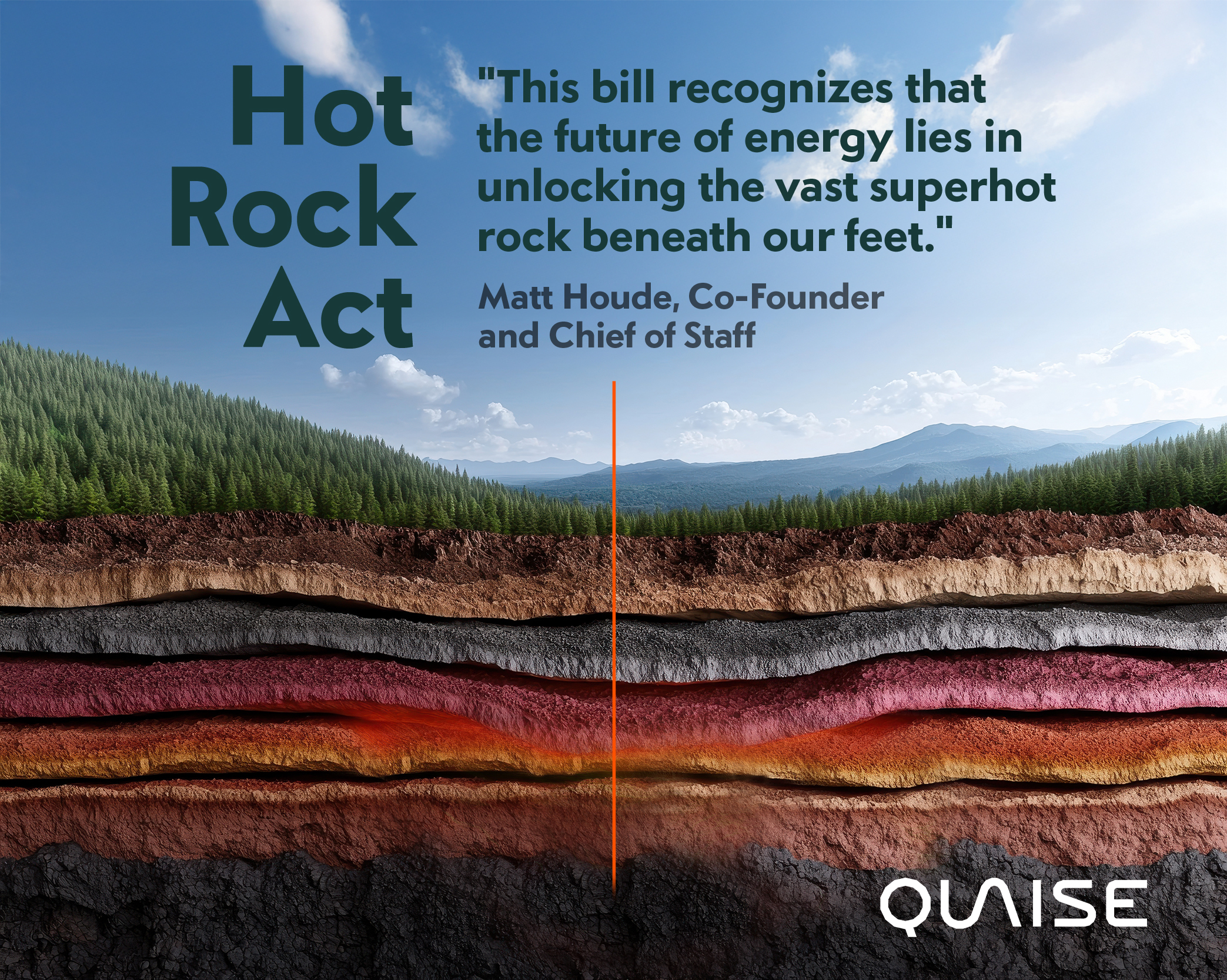
The Hot Rock Act proposes $127 million per year for geothermal R&D, including testing sites and milestone payments. While promising, some industry observers question the need for federal funding given the significant private capital already flowing into startups like Quaise Energy.
No votes or related bills recorded for this bill yet.
Document Type
Congressional Bill
Official Title
Hot Rock Act
Analysis generated by AI. Always verify with official sources.