Skip to content
Congress·In Committee·about 2 months ago

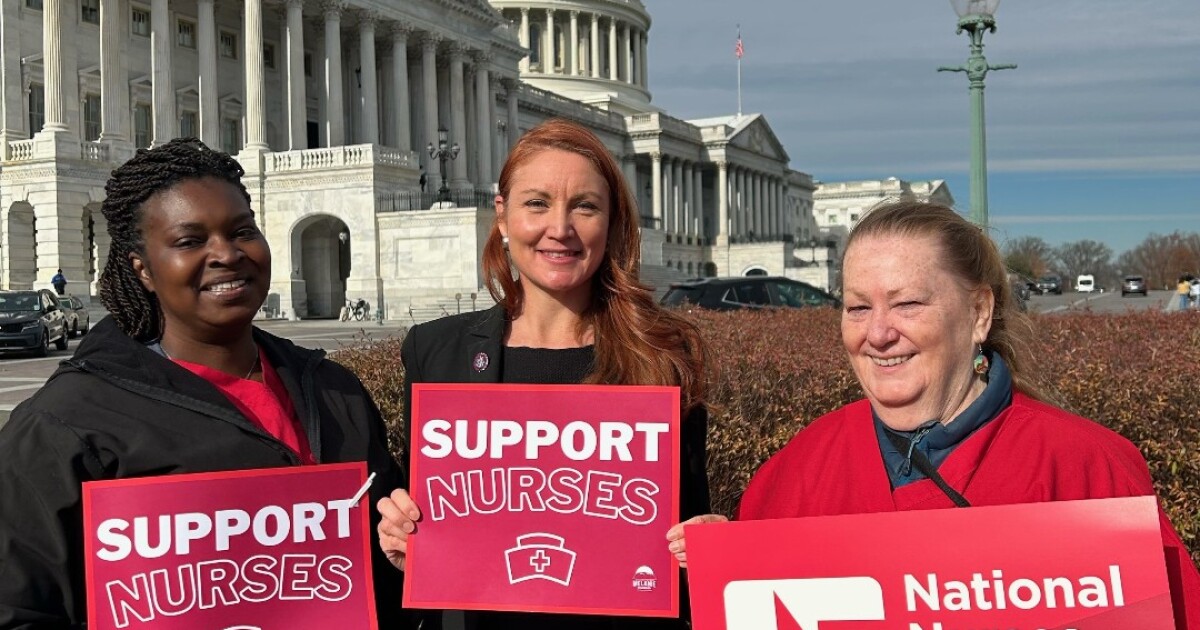
House Bill Would Fund Grants to Hire and Train Public Health Nurses in High-Need Communities

Also known as: Public Health Nursing Act

Legislative Progress

Filed
Review
House
Senate
President

Impacts

Mixed Impacts(1)
Union Member
Neutral
Positive Impacts(3)
Chronic Illness
Helps
Pregnant
Helps
Child Tax Credit
Helps

Key Points

  • Congress would require the Health Department to run a national program to grow the public health nursing workforce.
  • The Health Department could give grants to state, local, and territorial health departments to recruit, hire, and train registered nurses as public health nurses.
  • Grant money could pay for wages and benefits, needed medical supplies like protective gear, and basic administrative costs tied to the program.
  • The bill prioritizes communities with major health needs, like high chronic disease rates, maternal and infant health problems, low-income areas, and rural areas.
  • It would authorize $5 billion each year from 2026 through 2035 to support these hiring and service efforts, while requiring states to keep up their own non-federal spending levels.
HealthcareLabor Employment

Milestones

2 milestones2 actions
Jan 8, 2026House

Referred to the House Committee on Energy and Commerce.

Jan 8, 2026

Introduced in House

What Happens Next

Projected impacts based on AI analysis

After the bill becomes law and receives funding through the federal budget

HHS designs the grant program and opens applications for state, local, and territorial public health departments

Health departments can start applying for money to hire and train public health nurses and buy needed supplies

Within months after grants are awarded

Grant awards begin and health departments start recruiting and hiring registered nurses

More job postings for RNs in public health roles, including mobile clinics and home visitation programs

As newly hired nurses finish onboarding and training

Priority communities see expanded services (home visits, preventive education, chronic disease support)

People in rural/underserved areas may get easier access to basic care and follow-ups without long travel

Over the first 1–2 years of program operation

Maternal and infant health-focused nursing services expand in high-risk areas

More prenatal/postpartum support and earlier problem-spotting for parents and babies

Each grant year after initial awards

Year-to-year renewal decisions depend on departments keeping up their own spending (maintenance of effort)

Some areas may keep programs stable, while others could face cuts if local budgets drop and they can’t meet the requirement

Related News

2 articles

Source Information

Document Type

Congressional Bill

Official Title

Public Health Nursing Act

Bill NumberHR 6989
Congress119th Congress
ChamberHouse of Representatives
Latest ActionReferred to the House Committee on Energy and Commerce.

Sponsor

Cosponsors

(6)
D: 6

Analysis generated by AI. While we strive for accuracy, this should not be considered legal or professional advice. Always verify information with official government sources.